Information about the exam
Videos made by the hospital so as to not be surprised by the machines.
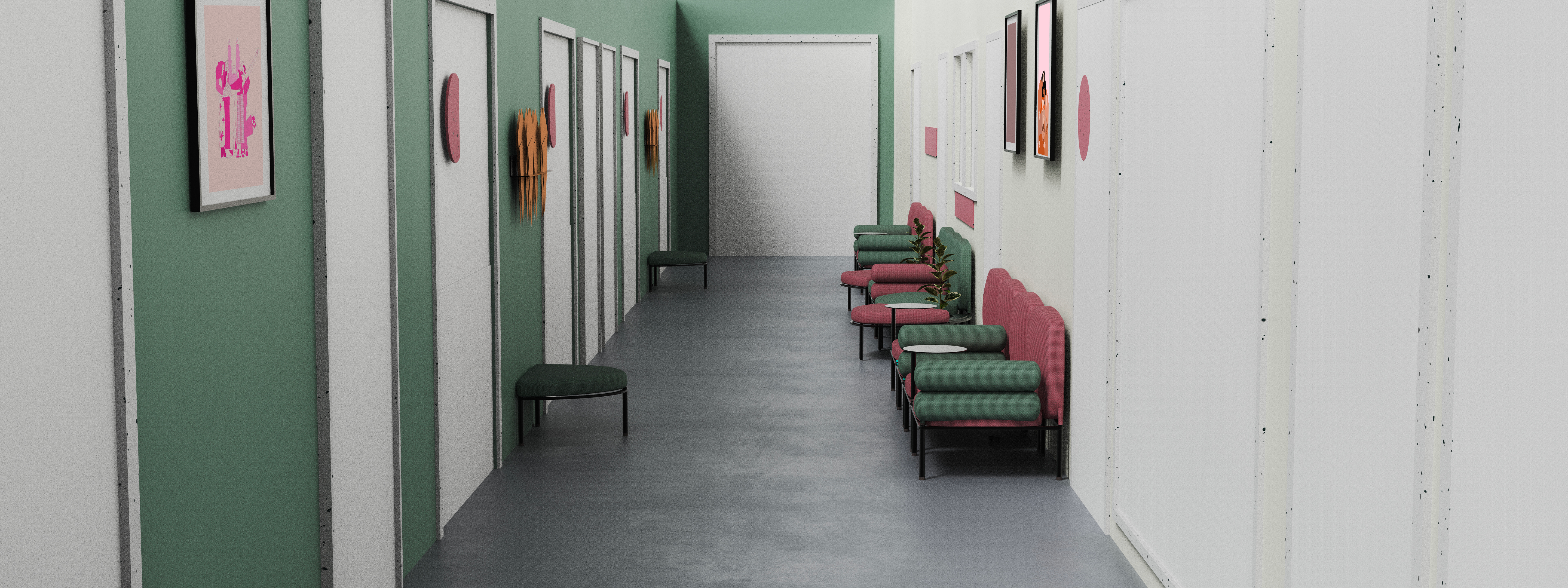
How can we transform the sterile and anxious place that is women's imaging into a welcoming space?
Our group was mainly composed of UX designers, so we wanted to highlight this specialization in our project. We therefore worked throughout the five months with patients and members of the hospital team to review the patient experience.
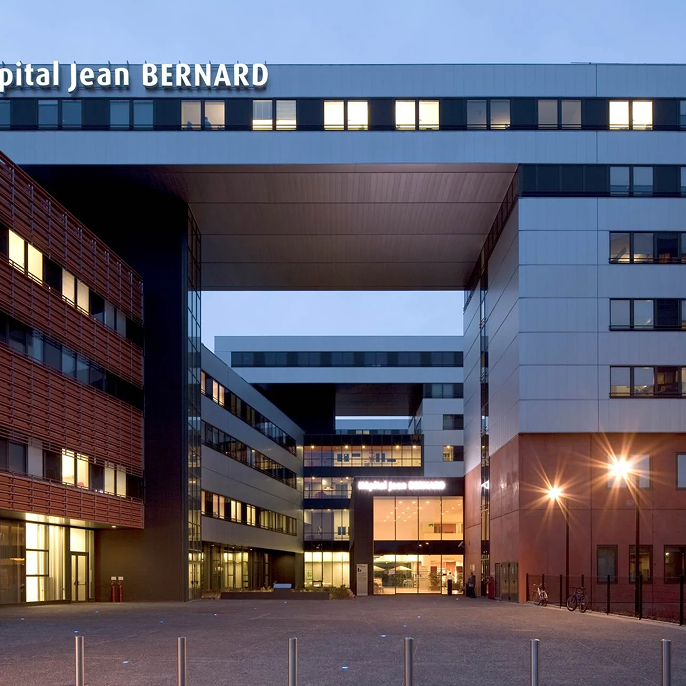
A whole lot of people come to the CHV, for different reasons, whether they're patients, visiting, going to the emergency... This diversity means creating a lot of different paths through the lobby. Currently in the Valenciennes hospital, we can count:
That's why the women imaging center come to us :
"We're interested in the broadest possible vision, from upstream of an imaging examination to management in the department, also looking at the "aftermath" in both senology and gynecology across the different modalities (mammo, MRI, echo, interventional radiology)..."
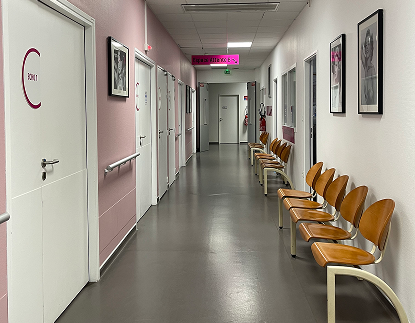
On our first visit, we noticed that the corridors were cold and lacked life and comfort.
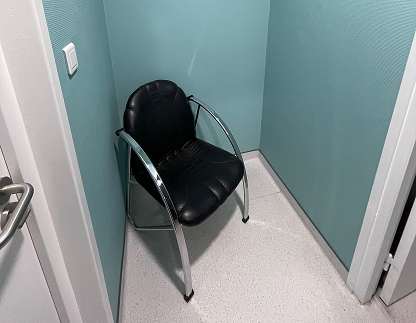
Between the waiting room and the examination room, but also while waiting for their results, patients must wait in a cramped and uncomfortable cubicle.
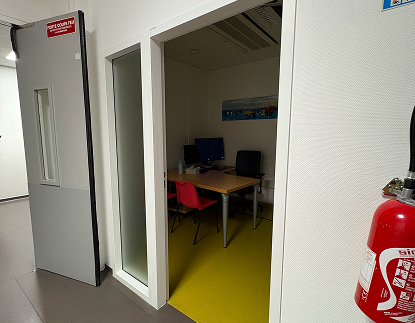
When they receive their results, women must go to the “announcement room,” but it is intimidating, dark, and cold, giving the feeling of a “coffin.”
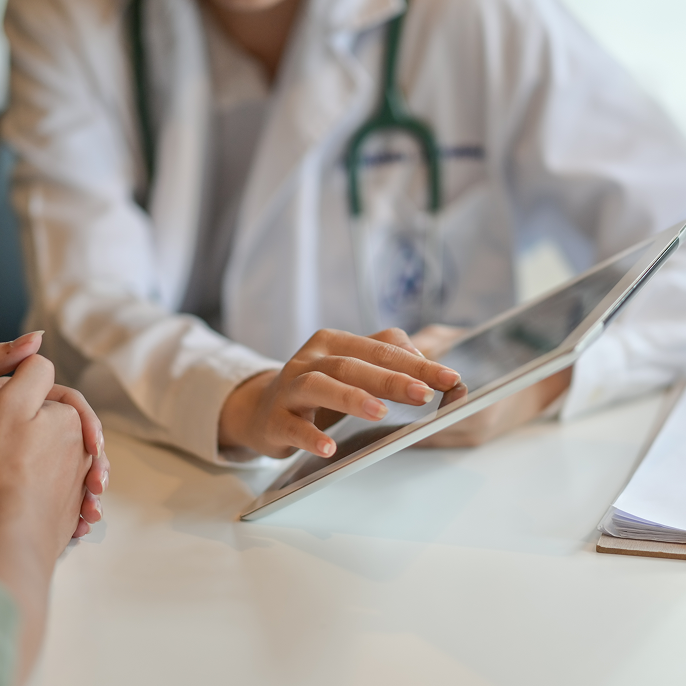
We conducted research at the hospital by interviewing patients in the ward in guerrilla style in order to gather information in the field. We also interviewed various members of the ward team in order to fully include them in the solution.
In order to obtain more quantitative data, we also created a questionnaire for patients and put up posters in the ward so that patients could fill them out in the waiting room.
Finally, we also had the opportunity to interview patients from different hospitals or associations to learn about their experiences.
Videos made by the hospital so as to not be surprised by the machines.
Thank to the app, the examination room can be customized to make you feel comfortable and in control.
Help patients understand medical language.
Offer several exercises on the app, such as breathing assistance.
Make sure the patient does not forget the exam.
Create a link between patients and CHV workers even before the exam.
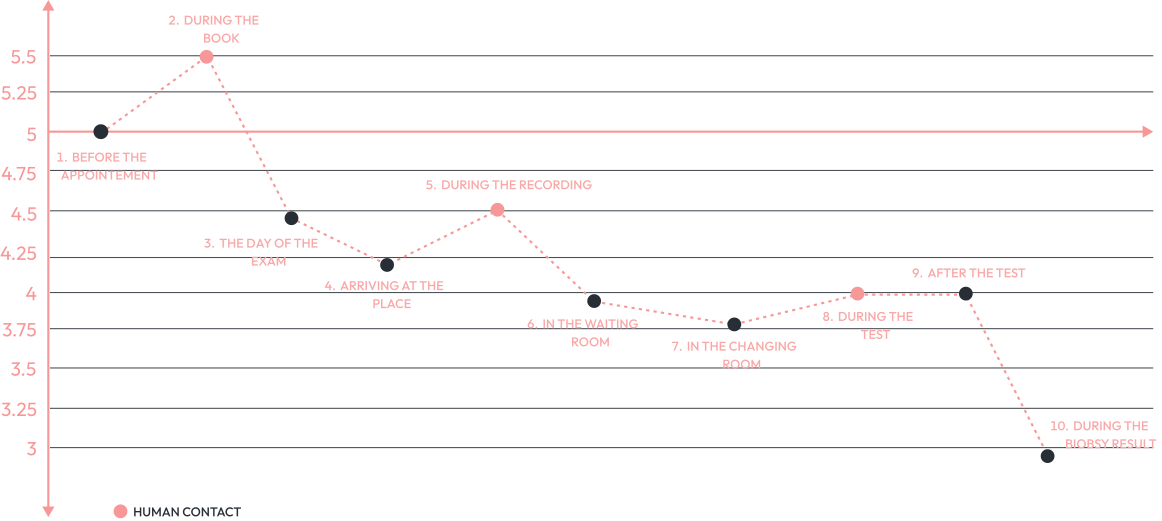
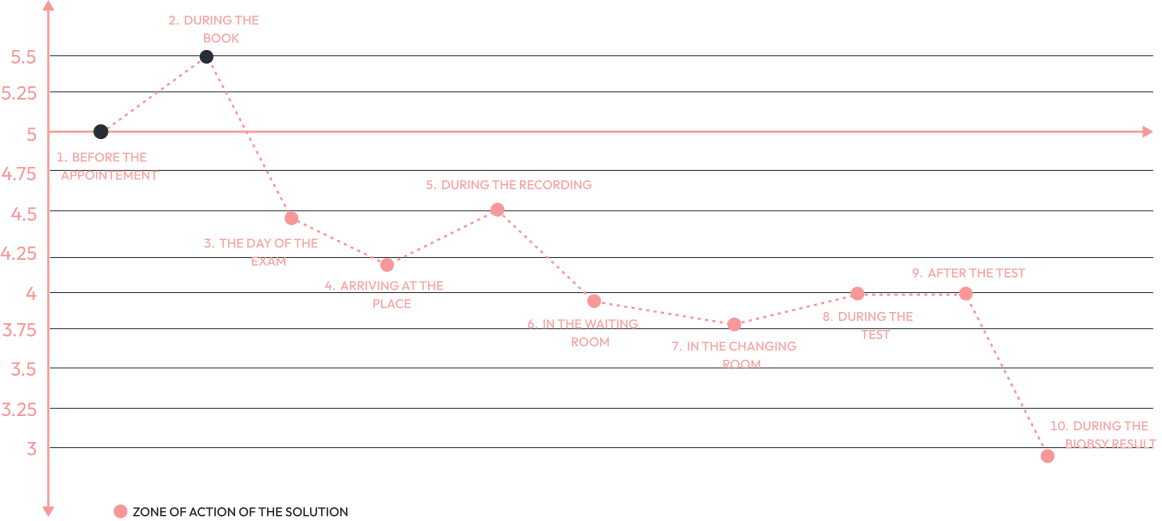
We have mapped out a patient journey, noting the different stages patients go through during their time in the women's imaging department. As can be seen in this graph, patients' moods improve when they have human contact.
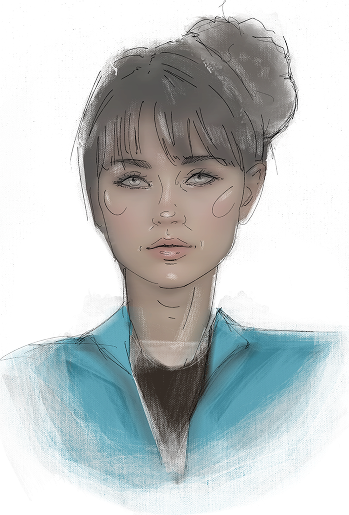
38 yo, First ultrasound outside pregnancy
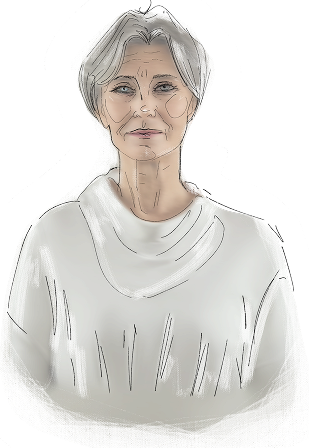
61 yo, Had a breast cancer, come for a check-up
Brief precision :
How can we transform the sterile and anxious place that is women's imaging into a welcoming space ?

Axe 1
Empathetic communication
Digital response

Axe 2
Comfortable universe
Physical response

Axe 3
Emotional support
Phygital response
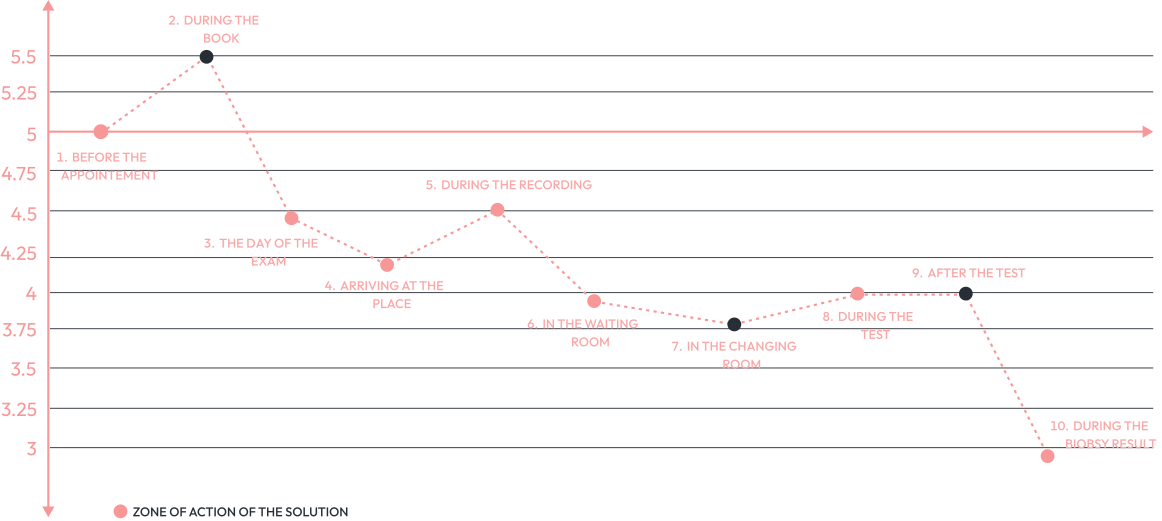
For this focus area, we wanted to encourage empathetic communication through actions and words in order to support patients during a difficult time and promote better prevention, but also to empower women through knowledge and adaptation of the environment.
Our proposal therefore impacted several moments in a patient's journey, as shown in colored points above.
After exploring existing solutions similar to ours and creating moodboards for each design direction, we refined the concept through the following points:
Limited access to medical results, causing frustration and uncertainty.
Waiting for results is a major source of anxiety, especially in hospitals, where reception and waiting conditions are often inadequate.
The 1st exam is stressful due to the fear of the unknown. It is often perceived as problem-focused rather than health-affirming, adding to the anxiety.
A lack of clear, empathetic medical communication can lead to stress and guilt, with some announcements perceived as abrupt by patients.
The patient's entourage supports her and helps her make the connection to everyday life.
Although patients may grow accustomed to the process over time, comfort does not improve. Imaging environments remain cold, impersonal, and often disrespectful of privacy.
We created an initial version for the first focus area, with several iterations. These different versions were tested with users so that their feedback could be incorporated into subsequent versions.
We drew inspiration from the “glassmorphism” and neumorphism styles to create a look that we wanted to be elegant and timeless.
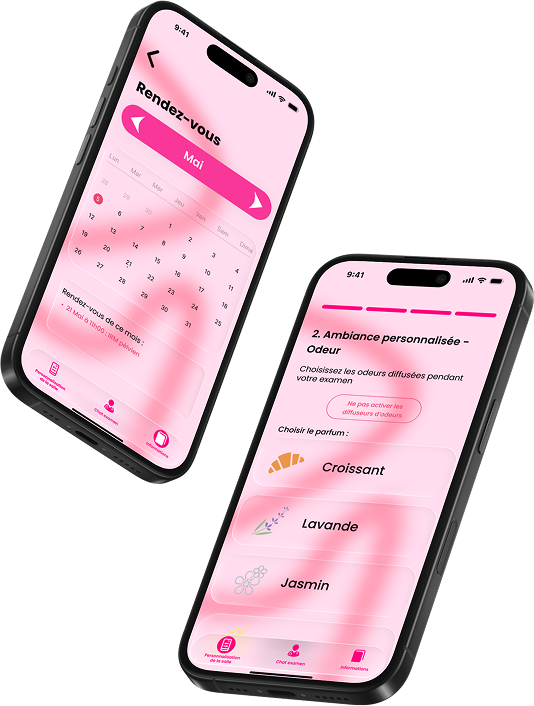
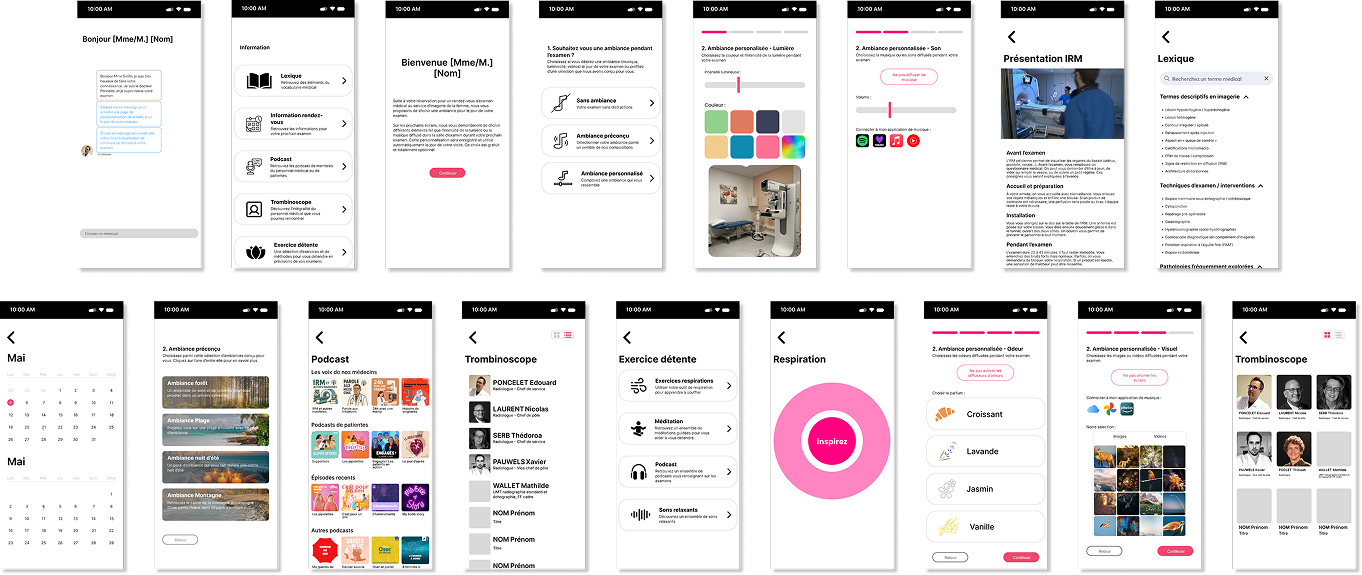
The main goal of the app is to personalize the examination room experience in advance by adjusting lighting, diffusing scents, or playing music to help patients feel more at ease. These preferences would be collected and applied automatically upon appointment confirmation, sent via the hospital's usual SMS system.
We also aimed to provide clear and reassuring information, using familiar language instead of overwhelming medical jargon. The app would include relaxation podcasts, guided breathing exercises, and a photo directory of hospital staff to help patients recognize who they will be interacting with.
Each of these features directly addresses pain points shared by the patients we interviewed.
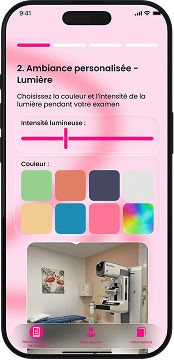
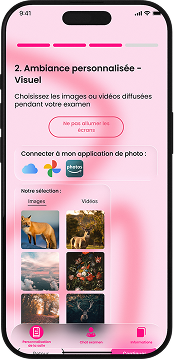
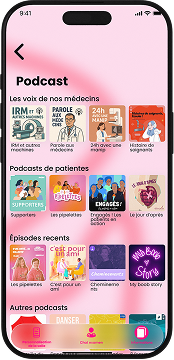


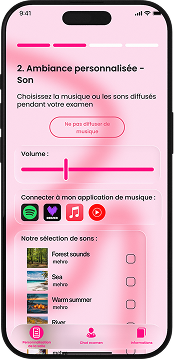
Finally, for our last theme, our research showed the importance of the patient's support network, so we wanted to develop an approach centered around this support, which we felt was essential.
We then developed the key points for this axis:
The goal is to do not stress the patient that aren’t stressed and to help the stressed one’s
Help the patients to do not feel alone during the moments where they are alone
Make sure the patient do not forget the exam
Part of our solution required an application to allow patients to personalize the room before their appointment.








Here is Nami, the new mascot of the women's imaging department and companion to patients when they decide to use the app.
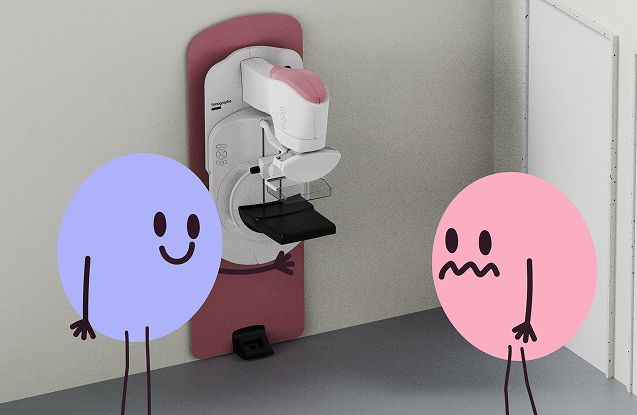
We wanted to create a relaxing and simple-looking mascot to break away from the very serious and medical image. We didn't want a human mascot to give it a cuter and more unisex feel.
Finally, the color pink is a reminder of the main color of the service.
The mascot is also part of our plan to redefine the furniture and traffic flow in the department, helping patients find their way around the hospital.
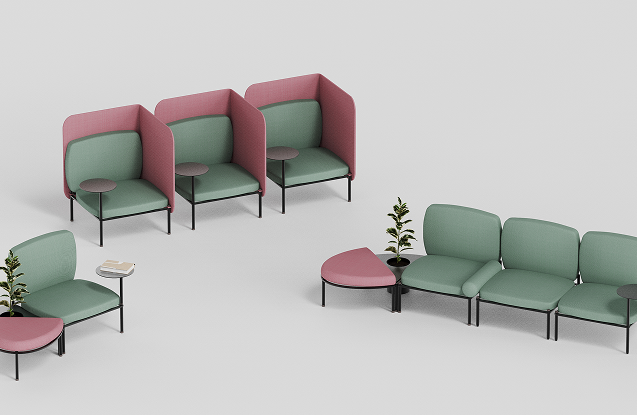
Our solution also offers a web app, a prototype of which was presented on the day of our jury review here.
It also served as a gateway to medical design and the discovery of patient experience, areas that I had previously only heard of.
This project helped me grow as a designer and as a person by working on such a serious subject with such serious consequences, but nevertheless, as many of our users pointed out, always with a touch of hope.
We tried to deepen this hope and play down the subject of women's imaging through this project, and each personality was able to express themselves. I was thus able to bring as much playfulness and fun as possible to allow patients to take their minds off things during this moment.
We are still working closely with Dr. Poncelet and the women's imaging department, as well as certain machine manufacturers, to continue the project and implement it within the department, and then possibly in other hospitals.
We are therefore currently reworking the application and the experience offered as part of an upcoming launch.